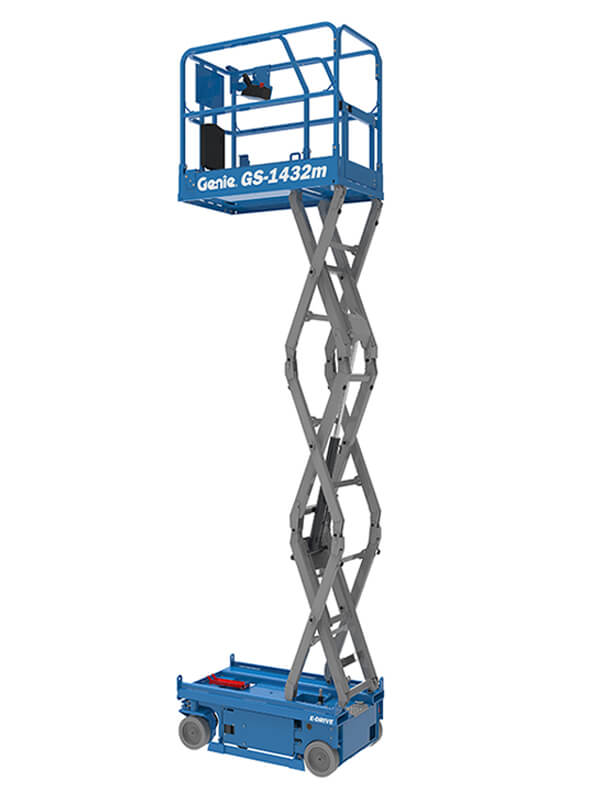



Genie GR-20 Runabout Self-Propelled Mast Lift
Twenty feet. Self-propelled. Reposition at height without lowering the platform.
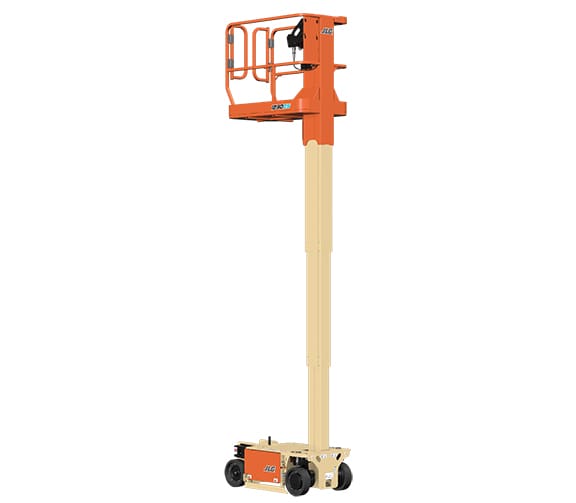
Genie GR-20 self-propelled vertical mast lift. 20-ft platform height, drive-at-height capability, 440 lb capacity, 31-inch width, auto-deploying stabilizer legs.
- 20 ft platform height (26 ft working height)
- 440 lb single-person capacity
- Self-propelled drive at height — reposition without lowering
- 31-inch overall width — fits through commercial door openings
- 24V DC electric drive — zero emissions, approved for indoor use
- Genie CutBack Speed Control — auto-reduces drive speed at elevation
- Auto-deploying stabilizer legs — no manual setup
- Platform and ground control stations with emergency stop
✓ In Stock — Ships in 5-10 business days
Request a Quote
We respond within 24 hours — pricing, availability & shipping included
Quote Request Received
Thanks! We'll get back to you within 24 hours with pricing, availability, and shipping details for the Genie GR-20 Runabout Self-Propelled Mast Lift.
| Model | GR-20 |
| Stabilizers | Auto-deploying, 4-point |
| Drive System | 24V DC electric |
| Manufacturer | Genie (Terex) |
| Overall Width | 31 inches (0.79 m) |
| Platform Size | 27" × 48" (0.69 m × 1.22 m) |
| Certifications | ANSI/SAIA A92.3, CE EN 1570-1, CSA B354 |
| Machine Weight | 3,100 lbs (1,406 kg) |
| Working Height | 26 ft (7.92 m) |
| Max Drive Grade | 20% |
| Platform Height | 20 ft (6.10 m) |
| Platform Capacity | 440 lbs (200 kg) |
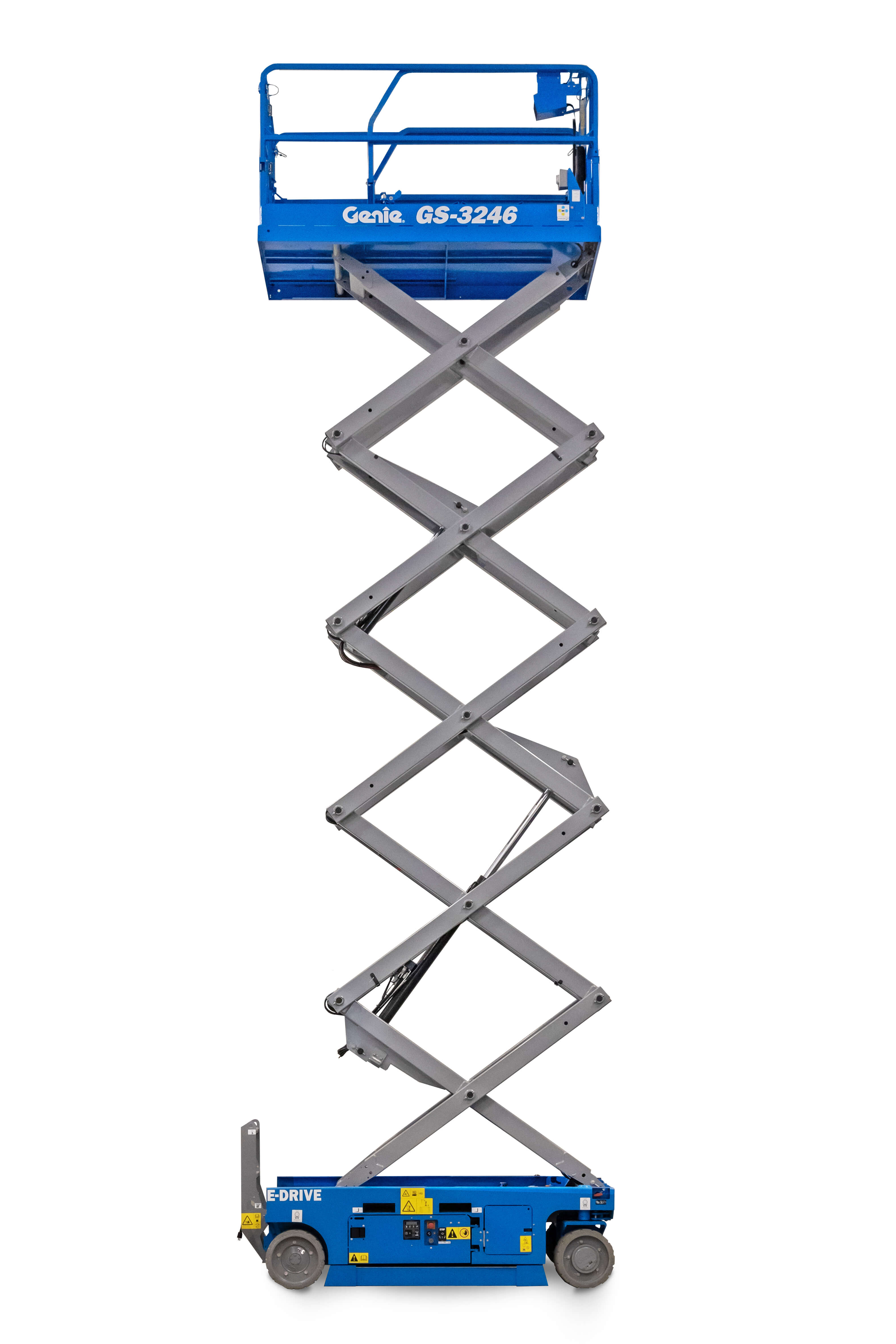
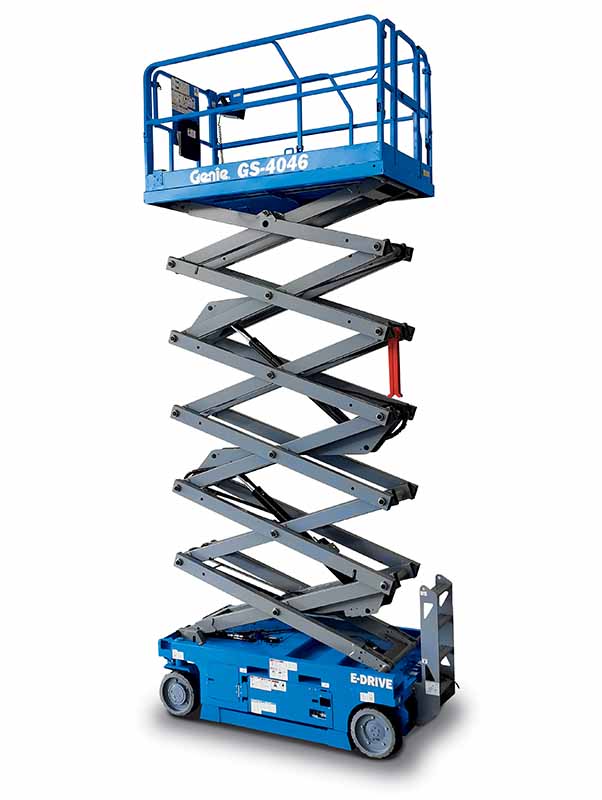
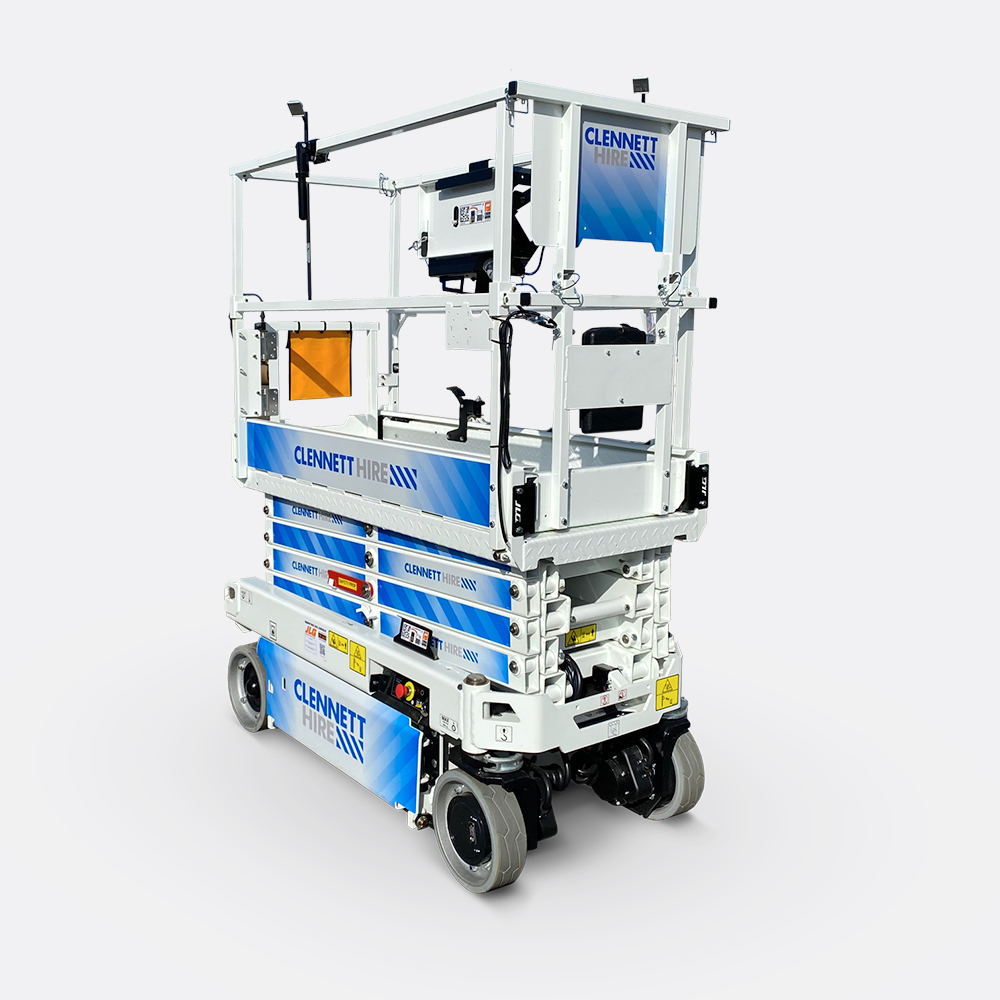
Multi-angle views of the Genie GR-20 Runabout Self-Propelled Mast Lift. Click any image to zoom.
Watch the Genie GR-20 Runabout Self-Propelled Mast Lift in action — full installation and operation demo.
Aerial work platforms (man lifts) use an electric-hydraulic or electric-mechanical scissor or mast system to raise an operator and their tools to height. All ground and platform controls are designed for one-person operation.
Ground Controls
All functions — drive, steer, and lift — are available from the ground control panel at the base of the unit. Use ground controls for initial positioning and for emergency lowering. Ground controls override platform controls when the key switch is set to "ground" mode.
Platform Controls
A control box mounted on the platform guard rail operates drive, steering, and lift from elevated position. The deadman switch (hold-to-run) on the lift/lower lever must be held continuously — releasing it stops all motion immediately.
Outrigger Deployment
Before raising above a defined height (typically 6 feet), the outriggers must be deployed and load indicators must confirm level ground contact. The lift will not raise above the outrigger threshold if any outrigger shows inadequate ground contact.
Emergency Lower
A manual hydraulic pump or gravity-controlled valve at the base of the unit lowers the platform in the event of power failure. The emergency lower valve is clearly labeled and accessible without tools. Familiarize all operators with its location before first use.
⚙️ Deadman / Hold-to-Run
All platform motion controls require continuous hold-to-run activation. Releasing the control lever stops all motion immediately. The deadman system means a worker losing consciousness or balance halts the machine automatically.
🔒 Tilt Interlock
An electronic inclinometer prevents lift operation beyond the rated slope. If the machine is on a slope exceeding the interlock threshold, the lift function is disabled until the machine is moved to level ground.
📏 Outrigger Interlock
The lift cannot raise above a set height until all outriggers show positive ground contact. Even a single outrigger without firm contact blocks elevation above the interlock threshold — preventing tip-over on soft or uneven ground.
🛡️ Platform Fall Protection
Full-perimeter guardrail system with mid-rail meets OSHA 1910.29 and ANSI/SAIA A92.20 requirements. A self-closing entry gate prevents the operator from exiting the platform at height. D-ring anchor points are rated for fall arrest attachment.
How does this compare?
GR-20 vs. AWP-20S push-around: the productivity difference is the drive motor. On a 10-point LED replacement run, each repositioning cycle on the AWP-20S takes about 3 minutes (lower, push, re-ascend). The GR-20 eliminates that entirely — drive at height to each point. Over a 40-point shift, that's 2 hours of saved positioning time. For single-location tasks, the AWP-20S remains the more economical choice. For multi-point maintenance routes, the GR-20 earns its premium back within the first week.
No reviews yet
Be the first to share your experience with this product.
You Might Also Like