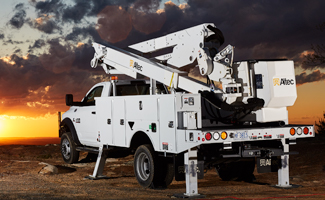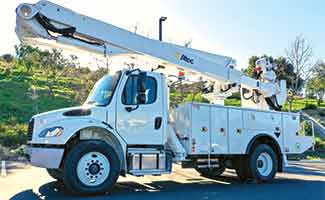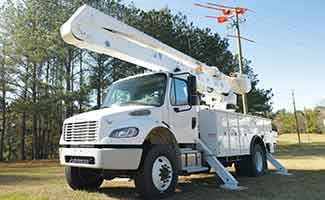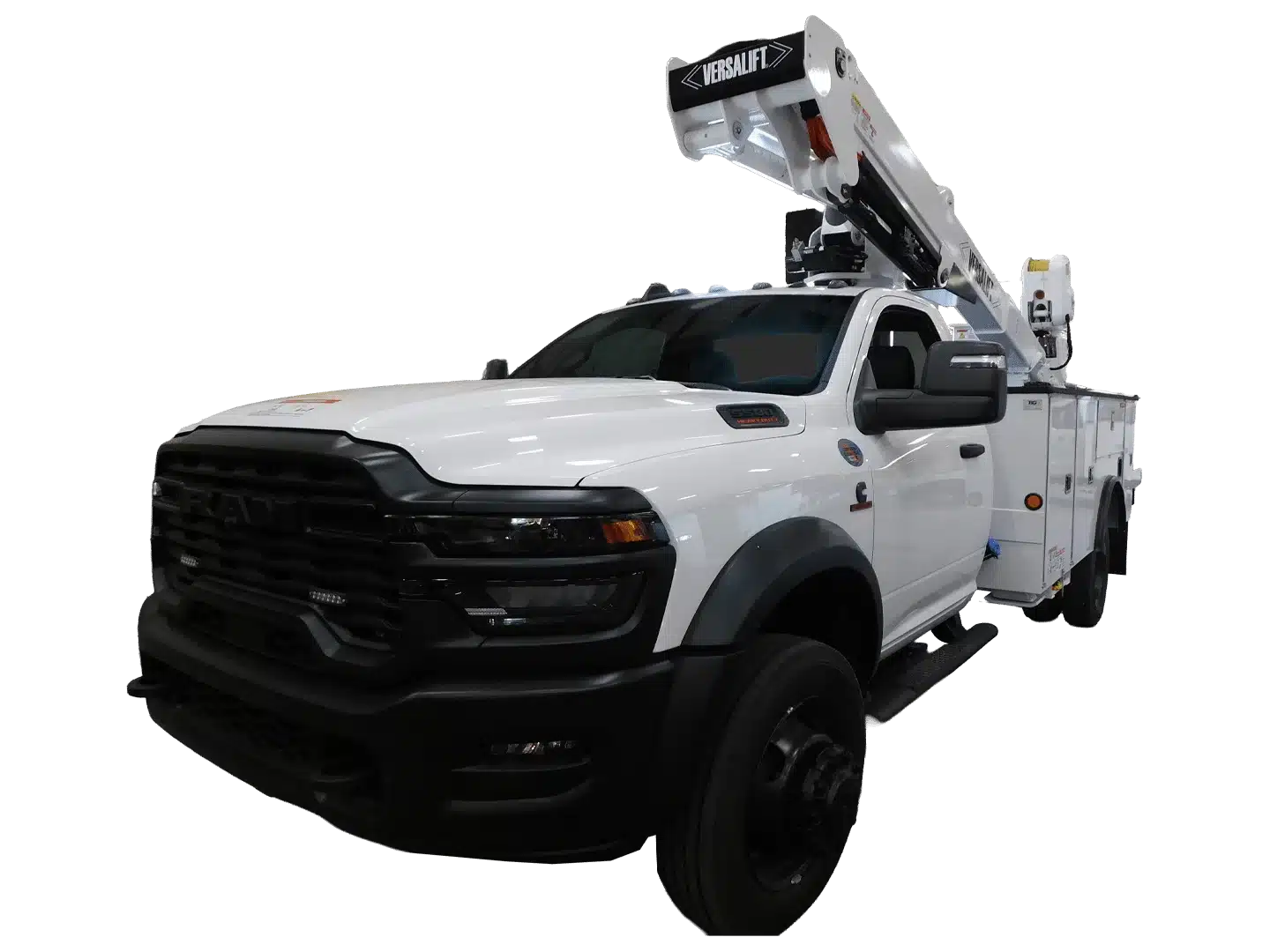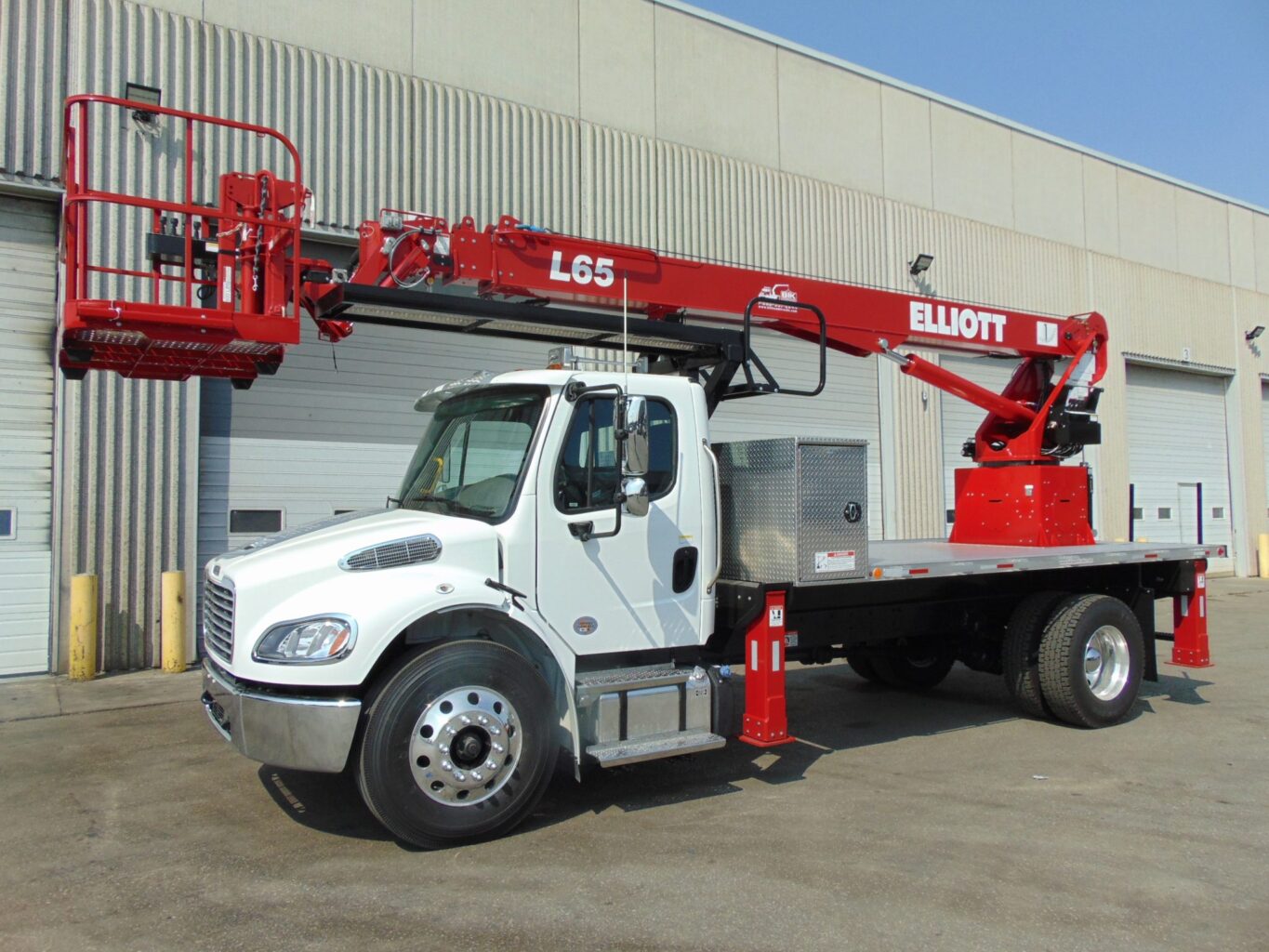

Elliott L60R HiReach Aerial Platform
Sixty feet of HiReach. The platform for telecom towers, high-bay lighting, and transmission work.
Elliott L60R 60-ft HiReach aerial platform. 34 ft horizontal reach, 500 lb bucket with winch mount. Telescoping lower + articulating upper boom. Mounts on Class 6-7 chassis. PTO or auxiliary diesel.
- 60 ft vertical reach (66 ft working height)
- 34 ft maximum horizontal outreach
- Telescoping lower + articulating upper boom for maximum versatility
- 500 lb bucket with winch mount point for equipment hoisting
- PTO hydraulic drive with optional diesel auxiliary power unit
- 4-point extendable outriggers with large-footprint terrain pads
- Mounts on Class 6 or 7 truck chassis (not included)
- Elliott 60+ year HiReach manufacturing pedigree
✓ In Stock — Ships in 5-10 business days
Request a Quote
We respond within 24 hours — pricing, availability & shipping included
Quote Request Received
Thanks! We'll get back to you within 24 hours with pricing, availability, and shipping details for the Elliott L60R HiReach Aerial Platform.
| Model | L60R |
| Rotation | 360° continuous turret |
| Boom Type | Telescoping lower + articulating upper |
| Outriggers | Hydraulic, 4-point extendable with terrain pads |
| Winch Mount | Integrated winch mount point |
| Manufacturer | Elliott Equipment Company |
| Primary Power | Truck PTO (hydraulic) |
| Certifications | ANSI/SIA A92.2, CSA C225 |
| Vertical Reach | 60 ft (18.3 m) |
| Working Height | 66 ft (20.1 m) |
| Auxiliary Power | Optional diesel APU |
| Bucket Capacity | 500 lbs (227 kg) |
| Chassis Requirement | Class 6 or 7 commercial truck |
| Horizontal Outreach | 34 ft (10.4 m) |
| Boom Assembly Weight | 7,200 lbs (3,266 kg) |
Multi-angle views of the Elliott L60R HiReach Aerial Platform. Click any image to zoom.
Watch the Elliott L60R HiReach Aerial Platform in action — full installation and operation demo.
Aerial bucket trucks use a truck-mounted hydraulic boom and articulating system to position a work bucket at height. The PTO-driven system draws power from the truck engine — boom operation requires the truck engine to be running.
PTO Engagement
Before operating the boom, engage the Power Take-Off (PTO) via the in-cab switch or lever. The PTO connects the truck's transmission output to the hydraulic pump. The truck must be in neutral (auto) or PTO gear (manual) before PTO engagement.
Outrigger Setup
Deploy all four outriggers before raising the boom. Place outrigger pads under each foot on soft or uneven ground. Confirm all four indicator lights show "set" (or physically verify leveling) before raising the boom above horizontal.
Boom Controls
Both platform (bucket) controls and base controls operate the boom. Platform controls replicate all boom functions with the addition of a platform rotation control. The base controls include an emergency override for all boom functions in the event of power loss in the bucket.
Emergency Lowering
A manual hydraulic override at the base of the boom lowers the platform in the event of engine failure or hydraulic system failure. The operator in the bucket should wear a full-body harness with a lanyard connected to the bucket's D-ring anchor at all times.
⚙️ Outrigger Interlock
The boom cannot be raised above horizontal unless all four outriggers show confirmed ground contact. An electronic sensor in each outrigger pad signals the control system. A boom raised without full outrigger deployment is the primary cause of tip-overs in aerial truck incidents.
🛡️ Insulation Testing (Class E)
Insulated bucket trucks require annual dielectric testing per ANSI/SIA A92.2. The fiberglass upper boom and bucket are tested to their full rated voltage (40 kV for Class E). A test port on the unit allows in-field testing without removing components.
🔒 Platform Fall Arrest Anchor
A certified D-ring fall arrest anchor is welded into the bucket structure. All operators in the bucket must wear a full-body harness with the lanyard connected to this anchor at all times — OSHA 1910.67 requirement for aerial devices.
🚨 Emergency Lower / Override
A manual hydraulic override at the base of the boom lowers the platform to ground level independently of all electronic controls and truck power. Location and operation are marked clearly on the unit. Test this system at every pre-shift inspection.
How does this compare?
At 60 feet, you're in the class of equipment used by telecom contractors, transmission utilities, and heavy construction. The Elliott L60R's telescoping lower boom provides the reach that pure articulating booms at this height can't match — the three-section lower extends to 40 feet before the articulating upper comes into play, giving 34 feet of total horizontal reach at 60-foot elevation. For tower climbing replacement work, the L60R positions a crew at the work height safely, eliminating the safety risks of manual climbing on 45–60 foot structures.
No reviews yet
Be the first to share your experience with this product.
You Might Also Like